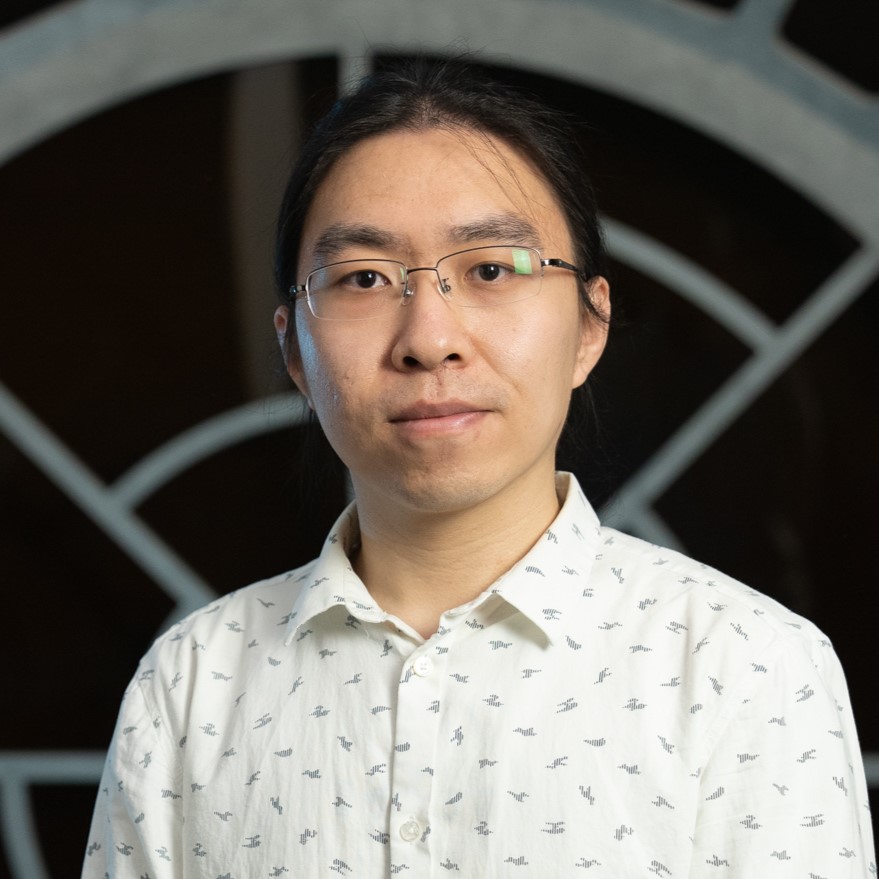
I am an Associate Research Scientist at DisneyResearch|Studios, Zürich, Switzerland. Prior to joining Disney as an employee, I was a joint PhD student at Computer Graphics Lab, ETH Zürich and DisneyResearch|Studios, advised by Prof. Markus Gross and Dr. Marios Papas. I am interested in rendering algorithms with path tracing as well as the application of machine learning techniques to improve rendering efficiency.
PDF version
(Publications at the bottom of the page :)
Education
- 2019.08 - 2024.03
-
ETH Zürich and DisneyResearch|Studios, Zürich, Switzerland
Joint PhD student in Computer Science
- 2017.09 - 2019.07
-
ETH Zürich, Zürich, Switzerland
MSc in Computer Science (with distinction)
- 2013.09 - 2017.07
-
Peking University, Beijing, China
BSc in Intelligence Science and Technology (with distinction)
- Programming - proficient: Python, MATLAB, C/C++
- Programming - familiar: HTML, JavaScript, LaTeX, CUDA C++
- Toolboxes and libraries: TensorFlow, PyTorch, Dash/Plotly
- Languages: Mandarin Chinese (native), English (fluent), German (intermediate)
Professional Experience
2024.04 - present
2024.04 - present
Associate Research Scientist
Rendering and Simulation Group, DisneyResearch|Studios (Zürich)- Research interest: physically based rendering, deep learning, image processing
2018.04 - 2018.09
2018.04 - 2018.09
Research Intern
Disney Research (Zürich)- Implementation of deep-learning-based denoising algorithm of Monte Carlo renders
- Generation of datasets
- Training and testing different network structures
Academic Experience
2019.08 - 2024.03
2019.08 - 2024.03
Doctoral Research Assistant
@ Computer Graphics Lab, ETH Zürich and DisneyResearch|Studios Supervisor: Prof. Dr. Markus Gross, Dr. Marios Papas Project: (Dissertation) Denoising Monte Carlo Renderings: a Sub-Pixel Exploration with Deep Learning- More effective deep learning techniques for denoising Monte Carlo renderings
- Using sub-pixel information and techniques including decomposition, auxiliary features and depth separation
2018.11 - 2019.05
2018.11 - 2019.05
Master Thesis
@ Computer Graphics Lab, ETH Zürich Supervisor: Dr. Marios Papas, Thomas Müller, Thijs Vogels Project: Denoising Radiance Samples in Scene Space with Order-Independent Neural Networks- Design and Implementation of an algorithm to filter raw radiance samples in scene space using neural networks
- Exploration of appropriate network architecture
2016.11 - 2017.06
2016.11 - 2017.06
Bachelor Thesis
@ Key Laboratory of Machine Perception (MoE), Peking University Supervisor: Prof. Zhouchen Lin Project: Fast Multiple Affine Template Matching- Implementation of an algorithm to locate multiple matches of a template in a single target image
- Combination of several previous methods to reach high accuracy and speed
Teaching Experience
Fall 2018/19/20/22/23
Fall 2018/19/20/22/23
Computer Graphics
Teaching Assistant @ Department of Computer Science, ETH Zürich Instructor(s): Dr. Marios Papas, Prof. Markus Gross- Master-level course of computer graphics, covering a spectrum of areas in CG with a focus on physically-based rendering
- Head TA for 2019-2022, responsible for general organization of the course
Spring 2020/21/22/23
Spring 2020/21/22/23
Scientific Visualization
Teaching Assistant @ Department of Computer Science, ETH Zürich Instructor(s): Prof. Tobias Günther, Prof. Markus Gross- Master-level course of scientific visualization, introducing techniques of visualization of scientific and abstract data
Publications
Ragged Neighborhood Attention for Spatiotemporal Neural Denoising of Deep Monte Carlo Renderings
- Ragged neighborhood attention (RaNA), extending neighborhood attention to deep images with a variable number of bins per pixel
- The first spatiotemporal neural denoiser for deep Monte Carlo renderings, supporting deep-Z and deep-OID images and temporal windows of up to 7 frames
- Substantially improved deep denoising quality while preserving the layered structure needed for deep compositing
Neural Denoising for Deep-Z Monte Carlo Renderings
- Extending kernel-predicting neural denoising to deep-Z images with a variable number of depth bins per pixel
- Hybrid architecture combining depth-resolved reconstruction at each bin with flattened reconstruction at the pixel level
- Depth-aware neighbor indexing to reduce artifacts caused by depth misalignment
Deep Compositional Denoising on Frame Sequences
- Extending deep compositional denoising to produce high-quality and temporally stable frame sequences
- Sharing the per-frame decomposition results by applying motion compensation between decomposition and denoising
- Reducing RAM consumption by 8-bit quantization of intermediate tensors
Automatic Feature Selection for Denoising Volumetric Renderings
- Selecting most impactful physically-based auxiliary features (scattering coefficient, volume albedo, density gradient etc.) for denoising volumetric renderings
- Training with feature dropout to enable efficient evaluation of impacts of different feature sets
- Improved denoising quality for different network architectures
Deep Compositional Denoising for High-quality Monte Carlo Rendering
- Learning an image-space decomposition of the noisy image to facilitate kernel-predicting denoising
- Improved denoising quality on datasets rendered with both academic and production renderers
- Possible combination with user-defined decompositions (e.g. diffuse-specular, direct-indirect)